AMA SA advocacy brings pathology reporting ‘win’
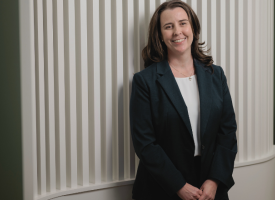
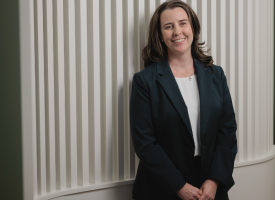
AMA SA Board member and haematologist Dr Shriram Nath says that AMA SA’s years-long campaign for updates to SA Pathology record systems demonstrates that while parliaments and ministers may change, our role in leading and advocating for system reform is ongoing.

The world realised a decade ago that 32-bit security in computer systems could be hacked easily and that there was a corresponding need for 64-bit security. Everyone started upgrading their computer systems as old legacy systems were not supported. Apple worked with developers to adapt their apps to 64-bit architecture. In 2018, Apple informed developers that macOS Mojave 10.14 would be the last version of macOS to run 32-bit apps.
I am one of the many who uses an electronic medical records system (EMR) to receive results from pathology and radiology companies via an encrypted HL-7 messaging system, keep notes and write correspondence to other medical practitioners. Most users use a Windows- based system in the world with a minority preferring Apple Mac computers. It was a gigantic task requiring almost three years for the EMR company to upgrade to 64-bit security for the EMR program in Mac computers. Private pathology companies had upgraded their systems.
A new problem for Mac users arose once the EMR was upgraded. I could not receive SA Pathology results electronically to my EMR as SA Pathology had not yet upgraded its system for Macs. Despite repeated contacts with SA Pathology, including the then-CEO, there was no indication when we could expect a resolution.
Meanwhile, we continued our efforts to maintain records and alert patients of their results – including patients in regional areas. Without blood results, it is difficult to take clinical decisions for a clinical haematologist. I understood that it was too hard for the staff in SA Pathology to pursue the matter. I started receiving patient reports by snail mail and my admin staff would scan them to the EMR. More memory was needed to store the pdf. Telehealth helped us deliver clinical haematology healthcare, but otherwise I was advised to search SA Pathology’s web-based system. It was slow, cumbersome and inefficient. And still no timelines for a ‘fix’.
What can a medical person do, when faced a critical problem in the delivery of healthcare, which depends on upgrading a system by a vendor and is beyond the control of medical practitioners? This is where the power of AMA SA advocacy and connections is demonstrated. As a member of AMA SA, I discussed the problem with then-President Dr John Williams, a rural GP who knows first-hand the importance of timely availability of blood results. He took up the matter in his regular meeting with the Health Minister, who in turn asked his team to investigate the matter.
In December 2025, SA Pathology completed upgrades to its computer systems so results could be delivered to Mac computers. An SA Pathology IT staff member helped me with the upgrade at my end. Now, I receive results to my EMR directly. This means that results previously sent in the post, and received several days later, will now be available when the results are available to ordering clinicians. This has benefits for many patients – but especially those in regional South Australia where there is no alternative to the public provider – and the clinicians and practice staff who refer to and manage the records.
For me, an AMA member of 12 years, this is a wonderful example of how we can influence health-system policies and practices, and, ultimately, patient outcomes.
Advocacy takes time. One does not need to shout and demonstrate on the street. One needs to know where and to whom a question or issue should be targeted, and when pressure may be required. Teams change; governments change, the make-up of parliament changes. One needs to be resilient, assertive and patient. AMA SA has always been in the forefront of improving systems for patient needs; our efforts to prevent the privatisation of SA Pathology is an example of that.
Within AMA SA there is also constant change. No matter who is at the helm, our advocacy continues. I am proud of our work to improve the health system and delivery of healthcare in South Australia.