AMA celebrates Women's History Month 2026
Throughout March, to celebrate Women’s History Month, the AMA will be featuring some of the outstanding women that have, and continue to, shape medicine in Australia.

Dr Helen McCardle - AMA Tasmania member
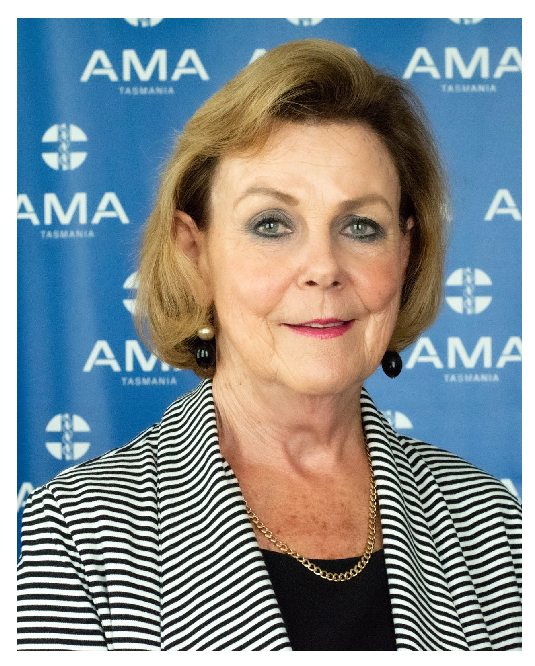
Dr Helen McArdle grew up in an Irish family where tradition quietly set expectations, and where being the second child — and a girl — came with its own conventions.
Her father, also a doctor, never shared those limits. He encouraged her to aim high, supported her ambitions without hesitation, and made it clear that gender should never define capability.
For Dr McArdle, at home, the belief was simple: “Women could do anything men could, more often than not with a little better organisation to boot.”
With her family’s backing, Dr McArdle followed her father and her brother into medicine and was encouraged to develop not only as a clinician but also as a leader.
Naturally shy, her early reserve was sometimes mistaken for aloofness. Over time, leadership taught her how to navigate that perception.
Across a career spanning occupational and environmental medicine and senior medical administration, she has found deep satisfaction in working across all levels of the health system, connecting easily with everyone from hospital support staff to senior executives.
To Dr McArdle, leadership has never been about sacrificing family or life beyond work.
“Leadership has never required sacrificing my family or personal life beyond work. Instead, it has needed balance, careful organisation, and a belief instilled in me by my father that being organised is not a constraint, but a strength.”
A respected medical leader, and a Fellow of the Australian Medical Association, her specialist medical college, and graduate of the Australian Institute of Company Directors, Dr McArdle has shaped Tasmania’s health system and strengthened the AMA as an institution.
She has represented Tasmania on both the AMA Federal Council and the AMA Pty Board. Joining the AMA as a junior doctor, she went on to make history as the first female President of the Tasmanian Branch, guiding the association through the post‑COVID period—one of the most demanding chapters in its history.
Amid sustained pressure and public scrutiny, she is known for her steadiness, tenacity, and refusal to retreat from tough decisions.
Across more than three decades in medicine, Dr McArdle has been a consistent advocate for equity, inclusion, and diversity, working to embed these principles into governance, policy, and professional culture.
Her leadership of the AMA Equity, Inclusion and Diversity Committee was marked by a determination to dismantle entrenched barriers and create fairer leadership pathways, particularly for women and parents.
Her commitment to women in medicine is both practical and enduring.
Through leadership roles with the Tasmanian Medical Women’s Society, Dr McArdle has supported advocacy and representation, and is widely regarded as a generous, exacting, and trusted mentor to women doctors, students, and trainees as they navigate critical stages of their professional journey — skills she applies often in her current role as Chair of the Post Medical Graduate Council of Tasmania.
An occupational and environmental medicine specialist, Dr McArdle has led workplace health and wellbeing initiatives across Tasmania and held senior advisory and governance roles focused on safety and workforce wellbeing.
Her work reflects a clear understanding that a sustainable health system depends on the health of its people.
Dr Helen McArdle’s legacy is one of values driven, “walk the walk” leadership — seen in the way she helped steady institutions during crisis and in her sustained work to improve leadership pathways for women across the medical profession.
A/Prof Rosanna Capolingua - AMA WA member
General Practitioner | AMA Life Member | Advocate and Leader
Assoc Prof Rosanna Capolingua AM has spent more than four decades shaping the medical profession through clinical excellence, fearless advocacy, and sustained leadership within the Australian Medical Association.
Determined from childhood to become a doctor, Rosanna’s path into medicine was marked by perseverance and resilience. Entering medical school after completing a science degree, she balanced study with motherhood at a time when women were actively discouraged from pursuing both. Experiences of inequity—whether in training, remuneration, or access to care—became catalysts for a lifelong commitment to fairness, compassion, and public advocacy.
As a general practitioner and solo practice owner, Rosanna has always been deeply connected to her community. Her advocacy was shaped by frontline experiences, including responding to preventable tragedy and challenging systemic decisions that compromised patient safety and equity. These moments propelled her into policy and representative work, where she consistently championed both individual dignity and the greater good.
Rosanna’s leadership within the AMA is historic. Recruited to AMA WA Council in her early thirties while raising a young family, she went on to become the first—and still only—female President of AMA Western Australia, before serving as AMA Federal President. Throughout her career, she has demonstrated that principled leadership and deep clinical insight can drive meaningful change.
Reflecting on her journey, Rosanna credits the AMA with providing a vital professional community and platform for advocacy. For her, staying connected has always meant contributing to a profession that values prevention, continuity of care, and strong representation for both doctors and patients.
As part of Women’s History Month, the AMA proudly celebrates Assoc Prof Rosanna Capolingua AM—an outstanding member whose legacy continues to influence medicine, leadership, and advocacy in Australia.
Dr Dagmar Berne - AMA NSW member
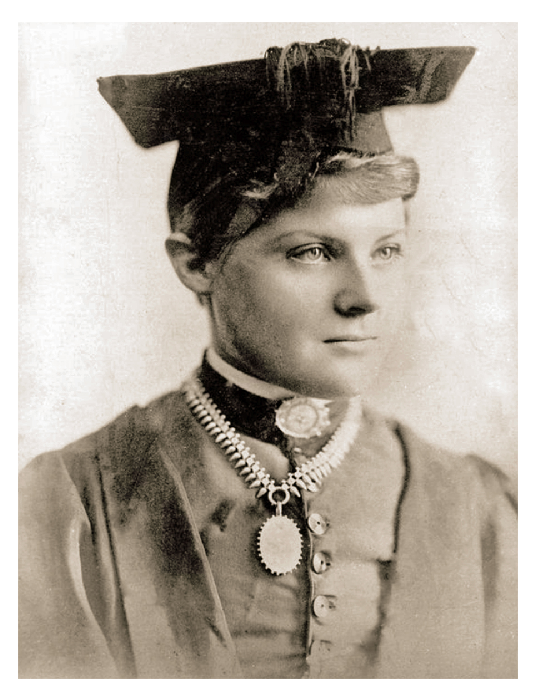 Dr Berne was the first woman in history to study medicine in Australia (though not the first to graduate).
She had to face down significant political obstructions to pursue her education, eventually having to complete her studies in Scotland, where she graduated with honours with a Triple Qualification – a joint diploma from the Royal College of Physicians of Edinburgh, the Royal College of Surgeons of Edinburgh and the Royal College of Physicians and Surgeons of Glasgow.
Dr Berne returned to Sydney and opened her own practice on Macquarie Street. She devoted her career to improving the lives of underprivileged and uneducated women and girls in Sydney, providing targeted care, and delivering accessible lectures about hygiene, nutrition and maternal medicine in the roughest communities in the region.
She was also involved with St John’s Ambulance, the Womanhood Suffrage League, and the Kindergarten Union of New South Wales. She’s now buried in Waverly cemetery.
Dr Berne was a registered member with the BMA NSW (which became the AMA NSW in 1972) for her whole career.
Dr Vida Viliunas - AMA ACT member
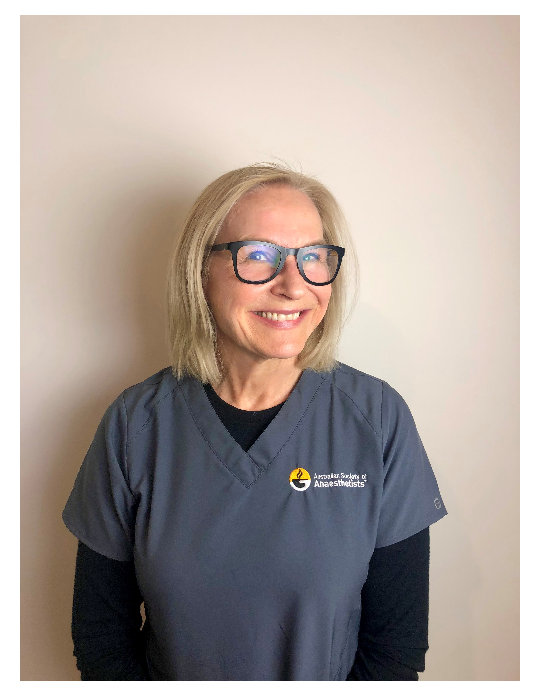 Canberra-based anaesthetist, Dr Vida Viliunas, is a leading light in Australian medicine, respected by senior politicians, loved by colleagues, and revered by medical students.
As president of the Australian Society of Anaesthetists, she advocates for the profession at the highest national levels. She is also a senior figure in medical education, having been an examiner for 12 years with Australian and New Zealand College of Anaesthetists and a previous chair of the final fellowship examination.
Nevertheless, on her ward rounds at The Canberra Hospital, patients still occasionally mistake Dr Viliunas for ‘the tea lady’.
“For some people, the idea of a female anaesthetist is hard to get used to, despite the fact that 30% of Australian anaesthetists are women,” she says.
Dr Viliunas is not deeply bothered by the lack of recognition, but says experiences like this have left her fascinated by how people can fail to appreciate the truth of a matter even when it’s right in front of them. They’ve led her to sharpen her communication skills over the years.
“I’m really interested in what influences people and how you get their attention, because so often in life you have a very short amount of time to get your message across, and misconceptions can be very deep-seated.”
“As a profession, it’s really important that we can communicate our value, particularly in the context of scope creep and workforce planning, and I’m glad I get the opportunity to do this through my professional roles.”
Dr Viliunas is known to many doctors in Canberra for her profound influence as a supportive mentor and colleague, especially of female doctors. She is a member of the Australian Medical Association and the Medical Women’s Society, and is actively involved in both organisations.
“I grew up with a strong sense of the value of community, and I’ve carried that attitude into medicine with me,” Dr Viliunas says. “As a child of Lithuanian expats, there was never an option not to sing in the choir or dance in the dance group, and so it was a natural extension of my mindset to be actively involved in the medical community.”
Today, Dr Viliunas credits the strong medical community around her for helping her through challenging times in her career. “Any colleague is but a phone call away. You’re never alone.”
Dr Viliunas’s father was a flying doctor in Western Australia, and she grew a love for medicine while accompanying him on hospital and community visits. Her mother would have loved to do medicine, but sacrificed that dream to support her husband and children.
“When my turn to study medicine came, I had the opportunity my mother didn’t, but I had my own sacrifice to make too, which was deferring having children – with all the anxiety that came with that.
“Thankfully it’s now more practical for women to start a family while they’re training to be a doctor, but of course, there are still challenges.
“Women have a different experience of medicine – that’s undeniable. We need to gather together, and be at the table, helping to chart the path forward.”