Local evidence the foundation of community care
The Rural Health International Place-based Education and Research (RHIPER) Conference at Murray Bridge enabled an examination of workforce issues through a rural generalist lens, writes Dr Richie Madden.
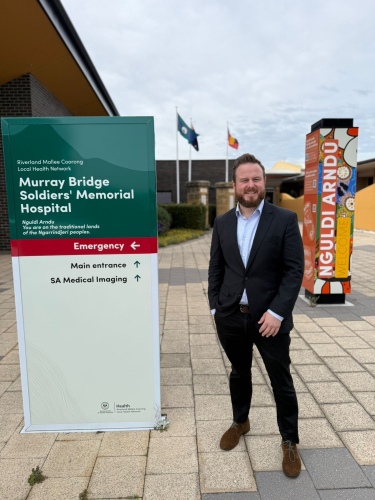
There are few opportunities in rural medicine to pause, step back and reflect. Attending the RHIPER conference from Bridge Clinic in Murray Bridge was one of those rare moments: a chance to momentarily set aside the pace of clinical work and engage in conversations that felt immediately familiar, relevant, and important.
The experience was both reassuring and thought-provoking. Reassuring, because the discussions reflected what many rural clinicians already understand through practice. Thought-provoking, because while the pathways forward are increasingly clear, the structural support required to sustain them remains uncertain.
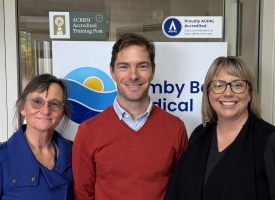
At Bridge Clinic, place-based education and research is not a theoretical framework but part of every day. Our education hub, supporting medical students alongside the Riverland Mallee Coorong Local Health Network’s (RMCLHN) Riverland Academy of Clinical Excellence (RACE) TMOs, RACGP-RG, ACRRM registrars and Bridge Research, has developed in response to community need, workforce realities and the practical demands of rural care. Training, service delivery and supervision are inseparable, each shaping the other. RHIPER offered valuable space to examine this intersection, which is something rural clinicians navigate constantly.
A consistent theme emerged throughout the conference: rural health solutions are most effective when they are locally designed, delivered, and evaluated. The focus was not on rural limitation but rural capability. Rural clinicians were recognised not only as providers of care but as contributors to knowledge, innovation and system improvement. Context of geography, community and culture was positioned as central.
Research was discussed in similarly practical terms. In rural settings, research is rarely abstract; it grows from the immediate questions of care delivery. Place-based training, too, is far more than location. It shapes clinical reasoning, professional identity and the capacity to practise safely within real-world constraints. When rural clinicians generate local evidence, the outcomes are tangible: services that better reflect community need, decisions grounded in lived experience, and policies informed by reality rather than assumption.
Yet an enduring tension was impossible to ignore. Rural innovation continues to rely heavily on goodwill, stretched clinician time and fragmented funding. RHIPER reinforced how targeted, stable investment can transform sustainability. Funding rural education hubs and clinician-led research is not discretionary; it is system infrastructure. Equally critical is equitable access to data, methodological expertise, ethics pathways and academic partnerships. Capability should never be postcode dependent. Visibility also matters: publications and knowledge translation legitimise rural expertise and ensure local decisions are guided by local evidence.
One idea that resonated strongly beyond the formal sessions was that rural workforce challenges are often framed as a shortage of clinicians, but they are increasingly experienced as a shortage of time. Rural clinicians deliver care while simultaneously teaching, supervising, improving systems and bridging service gaps. These roles are essential yet rarely resourced explicitly. The concept of a Workforce-Time Deficit captures this structural reality. Sustainability depends not only on workforce numbers but on whether systems recognise and support the full scope of rural practice.
RHIPER clarified a priority that rural communities already understand. Place-based education and clinician-led research must be funded as core functions of the health system. Short-term programs cannot substitute for durable investment. Training pathways, research capability and meaningful service redesign require stability.
Moving from conversation to action is neither radical nor complex. It requires sustained funding, workforce models that protect clinical time for teaching and research, and stronger pathways for rural clinicians to contribute to and access evidence. Rural clinicians are not waiting for solutions – they are already building them.
The real question is whether we are prepared to fund the work that is already working.