A doctor without borders
Retired orthopaedic surgeon A/Prof Robert Bauze has been named a Member of the Order of Australia for significant service to orthopaedics and trauma care as both clinician and administrator. But there’s much more to his story.
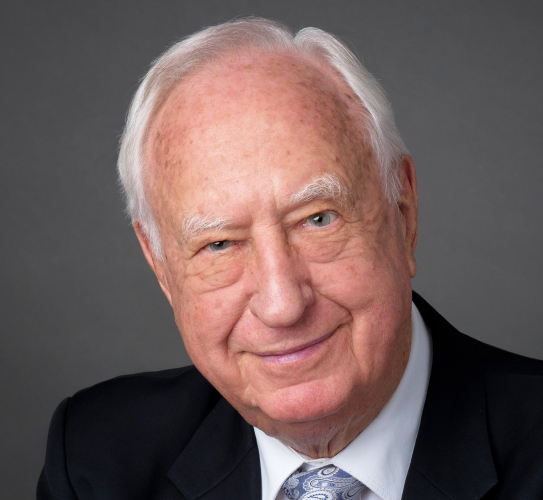
Not many orthopaedic surgeons can say they’ve helped save countless people from venomous Burmese pit vipers. A/Prof Robert Bauze can. In fact, he played an important role in facilitating the development of an antivenin that has significantly decreased renal failure and death from snakebite in Myanmar.
A/Prof Bauze’s connection with Myanmar began in 1975, while he was a senior visiting orthopaedic surgeon at the Royal Adelaide Hospital (RAH). Myanmar’s chief orthopaedic surgeon visited Adelaide on a World Health Organization fellowship, and the two quickly struck up a rapport. A year later, A/Prof Bauze visited Myanmar (Burma back then) on a whirlwind 48-hour visa – the longest permitted. He presented lectures, met with fellow surgeons and officials, and was asked to help obtain overseas exposure and training of Burma’s early career health professionals. He said he’d try.
Over the next 42 years, he kept ‘trying’– making a total of 25 trips to Myanmar.
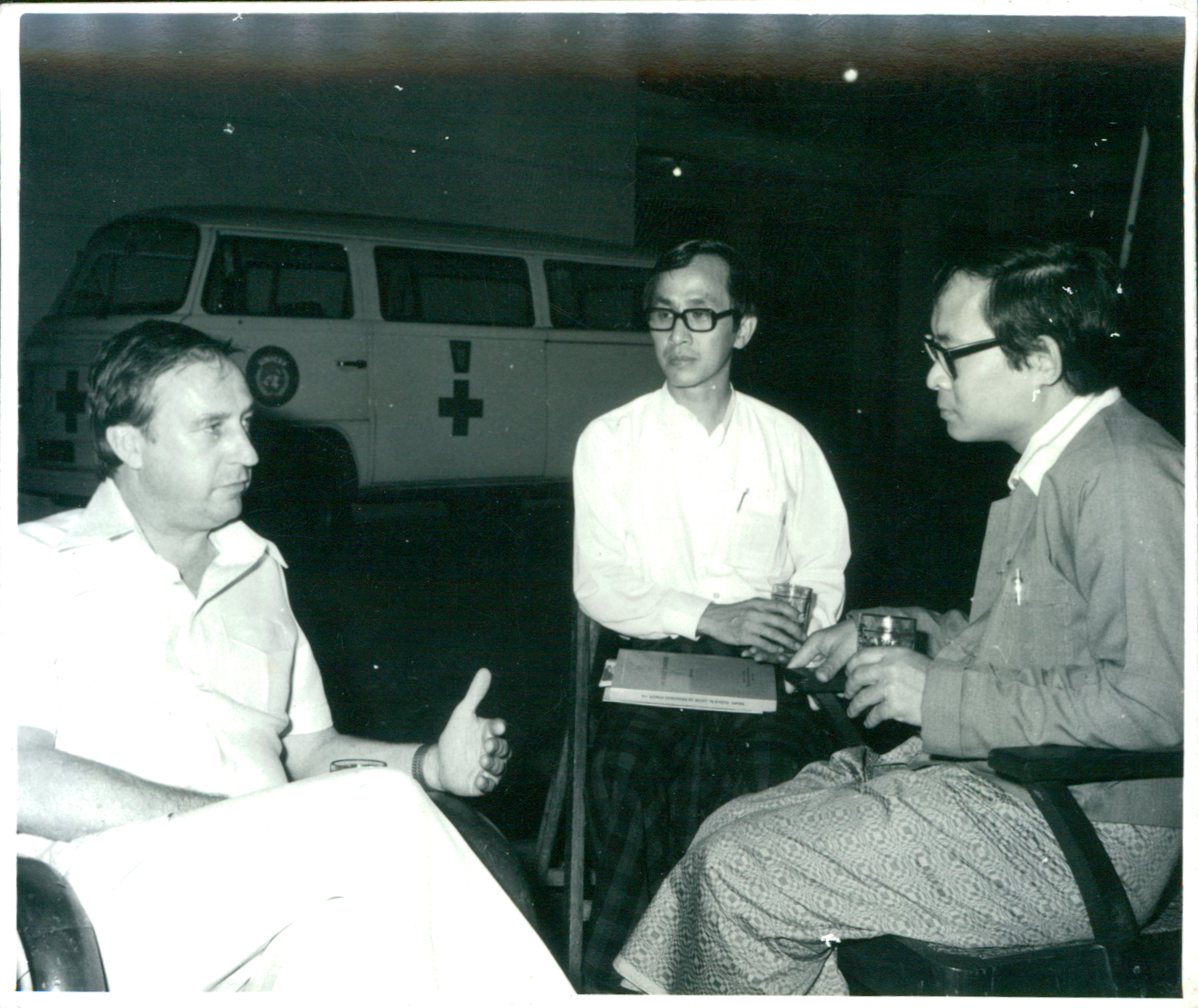
Most of the training and exposure was in Adelaide. Working with colleagues at the RAH and The Queen Elizabeth Hospital (TQEH), and later the University of Adelaide and UniSA, he obtained funding from AusAID and the Department of Foreign Affairs and Trade (DFAT) to bring 120 Myanmar health professionals to Adelaide. Their placements generally were eight to 12 weeks; some stayed a year, a few much longer.
‘In Adelaide they were exposed to international techniques, which was crucial given Myanmar’s periods of political isolation,’ A/Prof Bauze says.
‘People need to know what’s possible – even if they can’t implement it straight away. If they understand what can be done, they can plan, aim and eventually achieve it. Much of the benefit was long-term capacity building.’
A/Prof Bauze recruited Adelaide supervisors to visit Myanmar, helping forge partnerships across specialties including nephrology, nursing, plastic surgery, public health, ENT and pathology.
This laid the groundwork for dramatic improvements in care, including Myanmar’s first kidney transplants, better dialysis practices, enhanced spinal injury management and advances in plastic surgery and nursing.
And then there were the snakes.
In 2012, University of Adelaide nephrologist Professor Chen Au Peh proposed a project for large-scale production in Myanmar of pit viper antivenin.
‘Prof Peh explained that pit viper snakebite was the leading cause of renal failure in Myanmar,’ A/Prof Bauze says.
‘Local attempts to produce sufficient quantities of antivenin had repeatedly failed and imported Indian antivenin had inadequate effect on the Myanmar species of pit viper.’
A/Prof Bauze brought together a consortium comprising the universities of Adelaide, South Australia and Sydney, along with the Central Adelaide Local Health Network, to address the problem. Through this collaboration, Prof Peh and his university colleague, Dr Afzal Mahmood, submitted a proposal to DFAT seeking funding to establish large-scale antivenin production in Myanmar.
‘My main contribution was my network of connections,’ A/Prof Bauze says. ‘DFAT had ex-ambassadors to Myanmar whom I’d worked with over the years. They “put words in the right places”. I’d go to Canberra and Myanmar, talk with ministers and directors, get documents signed.’
In 2014, DFAT awarded $2.3 million to support the project, which modernised Myanmar’s antivenin production methods. Most importantly, it produced a powdered antivenin that didn’t require refrigeration – a breakthrough in a country where power failures are routine.
The ‘Myanmar chapter’ is only one part of A/Prof Bauze’s story – and not even the primary reason for his Australia Day honour. Over four decades in public and private practice, he helped shape the direction of orthopaedics in South Australia, as well as playing a role nationally and internationally as president of both the Australian and Asia Pacific Orthopaedic Associations. At the RAH he became the first director of orthopaedics and trauma, establishing subspecialty units in trauma, hand and upper limb, knee and sports injuries, hip and spine. He later took on the same foundational role across TQEH and Lyell McEwin hospitals.
A/Prof Bauze says he is most proud of the Adelaide Bone and Joint Research Foundation, of which he was a founding trustee, director and later chairman. The foundation raised around $3 million to support local research and led to the establishment of the first Chair of Orthopaedics at the University of Adelaide.
He says two things have motivated him throughout his orthopaedic career.
‘Firstly, it’s seeing somebody crippled with pain from injury or arthritis and then mobile and active and smiling – that’s really wonderful.’ he says.
‘The other is working in a trusted team of nurses, physiotherapists, social workers, managers, with medical and surgical colleagues, all pulling together to help patients, current and future, whether in Adelaide, nationally or internationally – that’s fantastic. That’s one of the real wonders of medicine.’