Play hard, play safe
Australian GPs can be a valuable source of information about safe physical activity in summer’s heat, writes AMA SA Committee of General Practice member Dr Mark Ralfe.
Australians love sport and love the outdoors. The Australian Sports Commission, in its 2023 report, stated that 78% of Australians play a sport or engage in physical activity, with 40% doing so weekly. The most popular activities are running and cycling, but other sports, such as cricket and tennis, are also popular in the summer. The fact that regular exercise helps multiple medical and psychological conditions is well known, but exercise should be safe and enjoyable.
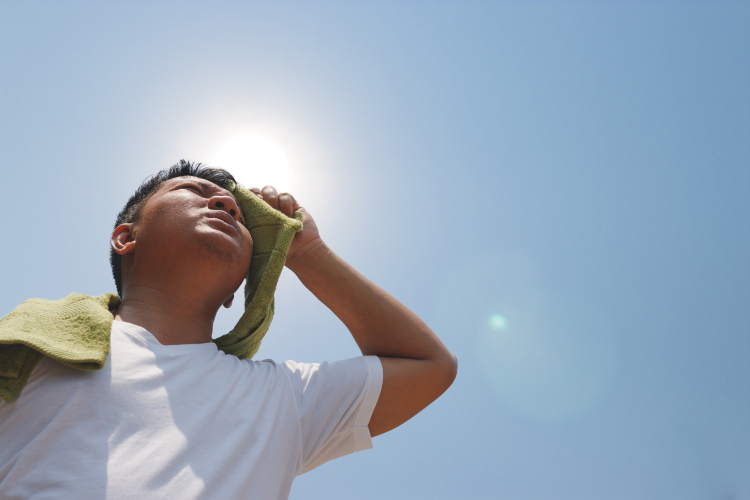
In many places in Australia, summer temperatures regularly exceed 35 degrees in the shade. Some also have high humidity, limiting the cooling effect of perspiration. In Victoria, the annual number of very hot days could be twice the 1986-2005 mean by the 2050s if the current rate of global warming continues.
For a lot of people, being active in summer’s heat leads to heat-related illness. While heat-related illness data is currently recorded only by emergency departments, the community burden is expected to be much higher, with people self-treating or seeking GP advice. The common fear is that people might drop out of sport and exercise altogether due to the experience being unenjoyable or getting heat illness. GPs are well placed to offer advice to members of the public and, if asked, local sports organisations about the risks of exercising in the heat. Luckily, there is a recently updated, easy-to-use web tool that can help us.
In 2024, Sports Medicine Australia, in collaboration with the University of Sydney, developed an updated web app to assess heat stress risk during sport and physical activity in Australia. It aims to inform and protect the community and athletes from the adverse health effects of heat stress while minimising unnecessary disruptions to their activities. The guidelines were created by the Heat and Health Research Centre at the University of Sydney.
The SMA Sport Heat Tool can be accessed at https://sma-heat-policy.sydney.edu.au/
It’s a location-specific, hour-by-hour and sport-specific tool, covering 32 of the most popular sports in Australia. It incorporates sport-specific metabolic rates, clothing and self-generated wind speeds to provide more precise estimations of heat stress risk. It also provides recommendations for hydration clothing and forecasting over the day and the following week. Useful for country carnivals!
Low-risk suggestions include adequate fluid hydration and wearing light clothes. Higher-risk recommendations include more frequent rest breaks and the use of active cooling strategies (e.g., ice towels and cold-water immersion) before suspension of play is finally advised.
Because there is limited data for older and young Australians, the developer of the tool advises that it is intended for healthy adults aged 18 to 60 years. Due to the underdevelopment of sweat glands in prepubertal children, they are at increased risk of heat illness. Commonsense risk-reduction strategies still apply, including more breaks, access to shade, drink breaks and potentially shortened games.
Sport should be safe and enjoyable. Exercise is arguably the single most important intervention we can encourage as doctors for our patients, and having easily accessible tools to give evidence-based advice makes it that bit easier.
Other resources:
- ‘Beat the Heat’ fact sheet
- Exercise is Medicine
- Sports Medicine Australia Extreme Heat Policy
- SA Health Heat Related Illness
AMA SA Councillor and Committee of General Practice member Dr Mark Ralfe has post-graduate qualifications in sports medicine and is a past chair of Sports Medicine at RACGP.