Media Release: SA mental health patients waiting up to 35 hours in overcrowded EDs
The AMA's Public Hospital Report Card: Mental Health Edition 2025 reveals significant and concerning gaps in access to emergency mental healthcare in South Australia.
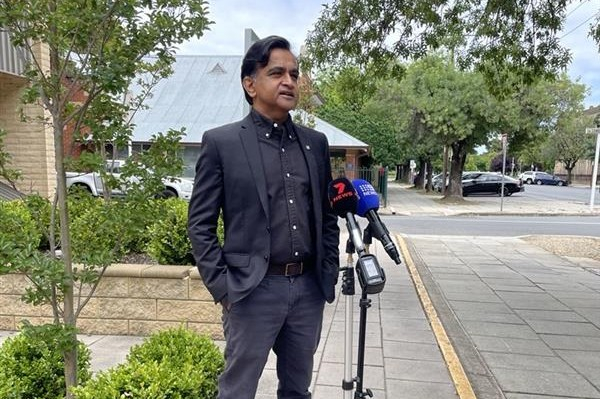
South Australian patients suffering mental health emergencies are being forced to wait in EDs for up to a day and a half before receiving a bed – longer than anywhere else in the country.
The Australian Medical Association’s Public Hospital Report Card: Mental Health Edition 2025 shows patients who were admitted to South Australia’s public hospitals with mental health-related conditions during the 2023/24 financial year waited an average of 11 hours and 18 minutes in overcrowded EDs. That’s a 70% increase over the past decade.
Alarmingly, one in ten patients were kept waiting 35 hours and 46 minutes – much longer than any other Australian state or territory.
The President of the Australian Medical Association in South Australia (AMA SA) Associate Professor Peter Subramaniam says the long waiting times are ‘completely unacceptable’.
‘Vulnerable people in acute mental distress are being left in brightly lit, noisy emergency departments for far too long – often up to a day and a half – because there is simply nowhere suitable for them to go,’ A/Prof Subramaniam says.
‘The people represented in the AMA’s report are not just statistics; they’re real people – young people in crisis, elderly people with dementia, people experiencing psychosis or suicidal ideation – who are being failed by a system that continues to show signs of immense pressure.’
The report notes that 57 specialised mental health beds were added between 2017 and 2024. South Australia now has 28 mental health beds per 100,000 residents, slightly above the national average.
A/Prof Subramaniam says that progress is encouraging and has welcomed the expansion at Noarlunga Hospital that will bring another 24 mental health beds online. But he says more investment in community-based services is essential to intervene earlier and prevent mental health issues from escalating to crisis point.
‘The problems start long before people arrive at the hospital door. Community mental health services are severely under-resourced, leading to avoidable ED presentations,’ A/Prof Subramaniam says.
‘We need properly funded community mental health services – including crisis support, acute care teams, GP-led early intervention and follow-up after discharge – to prevent people from reaching breaking point.
‘We also need to continue to continue build capacity at our hospitals. The new Women’s and Children’s Hospital must include provisions for young people to receive specialist care when hospitalisation is required.’
A/Prof Subramaniam says ensuring South Australia is equipped to meet the complex mental healthcare needs of the community requires cooperation and shared investment between the South Australian and Australian governments.
He’s calling on all sides of politics to make mental healthcare a priority before next year’s state election.
‘This is a direct call to political leaders on both sides: commit to a fully funded community mental health plan for South Australia,’ A/Prof Subramaniam says.
‘Every South Australian deserves timely, compassionate and appropriate mental health care – not a night in an overcrowded, stressful ED.’
For interview requests please contact Media Manager Ben Terry on 0478 847 604.