Media release: Who's really on the ramp?
The Australian Medical Association’s Ramping Report Card 2026 highlights how far South Australia’s ramping crisis has gone backwards despite record investment in beds and frontline medical staff.
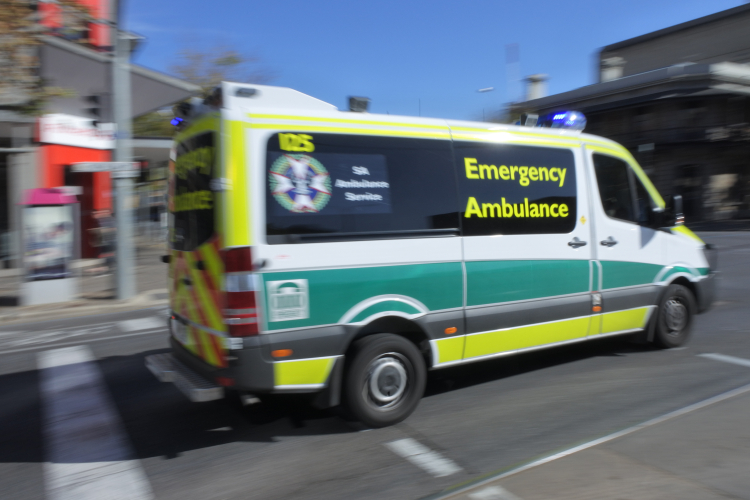
Total hours lost on the ramp across Adelaide’s hospitals have more than tripled over the past five years, rising from roughly 15,000 hours in 2019–20 to more than 49,000 hours in 2024–25.
The report also shows that, for another year, the state government is consistently failing to meet its own targets.
SA Health aims to transfer 90% of patients from ambulance paramedics to hospital clinical staff within 30 minutes. Just 45.7% of patients were transferred within that timeframe in 2024–25 – a 1.6 percentage point decline on the previous financial year and an 18.1 percentage point deterioration over the past five years.
AMA SA President Associate Professor Peter Subramaniam says the findings show the State Government’s current approach is not addressing the underlying pressure on the system.
‘South Australians keep being told the State Government is building a bigger health system – yet ramping continues to get worse,’ A/Prof Subramaniam says.
‘That tells us we need a new approach – and it starts with understanding who is on the ramp.’
AMA SA is calling for three practical, low-cost measures to show where pressure is building and whether current responses are working:
- Demand driver dashboard – a public dashboard showing what types of patients are on the ramp (e.g. aged care residents, mental health patients and people living with chronic disease)
- Staffed bed delivery tracker – a public tracker comparing beds promised with beds actually delivered and staffed
- Patient flow panel – a small independent clinical panel, including AMA SA representatives, to translate ramping data into practical action
‘Monthly ramping figures only tell part of the story,’ A/Prof Subramaniam says.
‘A demand driver dashboard would show where pressure is building so funding can be directed to the parts of the system under the greatest strain.
‘If a significant proportion of patients on the ramp are people living with chronic disease, that points to the need for stronger investment in preventive and community-based care – so those conditions can be managed by GPs rather than escalating into hospital presentations.
‘If the pressure is coming from aged care, mental health or other parts of the system, that should be visible too.
‘Until we know who is ending up on the ramp – and why – we will continue to make decisions in the dark.’
A/Prof Subramaniam says the staffed bed delivery tracker is another key part of the solution.
‘AMA SA welcomes the additional 600 beds and 4,000 frontline health workers that have come online under the Malinauskas government,’ A/Prof Subramaniam says.
‘A staffed bed delivery tracker would give South Australians a clearer picture of where those beds are and whether there are enough staff to operate them.
‘AMA SA has raised these recommendations with the Health Minister and will continue to work constructively on practical solutions.
‘Everyone agrees ramping needs to improve – it starts with better, more meaningful information and the right people in place to turn that into real improvements.’
For interview requests please contact media manager Ben Terry on 0478 847 604.