President’s update: Where to from here on pharmacy prescribing?
In this month's President's Update, Associate Professor Peter Subramaniam outlines AMA SA Council's latest work on pharmacy prescribing and organ donation and the advocacy priorities flowing from two newly endorsed position papers.
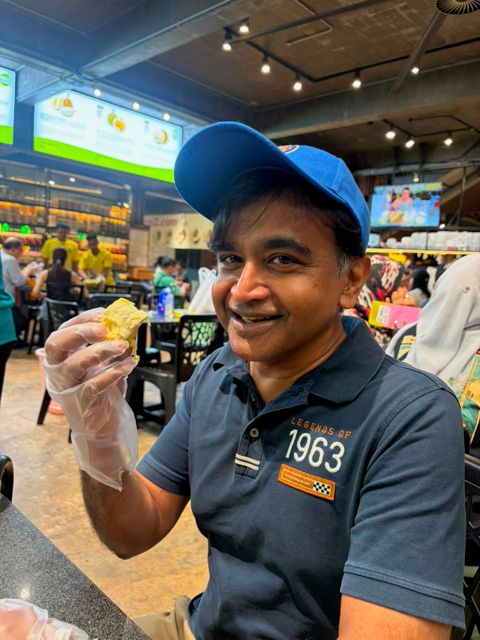
I’m writing this from the tropical warmth of a muggy Malaysia, a significant distance from the Adelaide winter during a short holiday to see family and celebrate a much-loved aunt’s 90th birthday. It’s always great to reconnect with the country of my birth – the warm nights, the familiar sights, sounds and smells (yes, I engaged enthusiastically with durian!), and the spectacular tastes of Malaysian food. It’s still the same wonderful, chaotic and vibrant mix of my childhood – Malay, Chinese, Indian, Ceylonese and multiple other inheritances and religions sharing a street, a table and the common language of tolerance and generosity. There are, of course, the usual tensions and differences that come with politics, but heritage and culture have never truly been the primary driver of division in the Malaysia that I was born in, nor should it ever be in the Australia that I am now proud to call home. I’m pleased to have this time to reconnect with friends and family here.
But the work of the AMA SA business doesn’t stop just because I’m away – the team makes sure of this. Last Thursday, I joined the AMA SA Council meeting remotely for a productive evening of discussion. Council endorsed two important position papers, one on organ donation (more on that in a moment), and another on pharmacy prescribing. We also noted our support for changes to Commonwealth law to improve equitable access to voluntary assisted dying via telehealth to regional Australia.
Our position on pharmacy prescribing is guided by a simple principle: patients receive the best care when health professionals work to the full scope of their expertise within a system that supports coordinated, connected care.
AMA SA remains concerned about programs that allow pharmacists to diagnose and prescribe for patients who present with symptoms that may have a range of underlying causes. We remain concerned – and have raised this with government – that in the absence of robust and transparent evaluation, there is no evidence that the current limited training required for pharmacist prescribing and the expansion of scope of practice does and will meet the standard of care necessary to safely diagnose and manage these conditions.
The position paper calls for greater transparency and accountability around existing pharmacy prescribing programs before any further expansion is considered. This includes publication of the full clinical governance framework, covering areas such as credentialing requirements, incident reporting, communication with a patient’s GP and having clear pathways for escalation when needed.
If a healthcare reform is proven to improve patient outcomes, strengthen access to and the continuity of care, and deliver value for taxpayers, then it deserves support. If it cannot demonstrate those outcomes, governments must have the courage and conviction to reverse course.
Organ donation
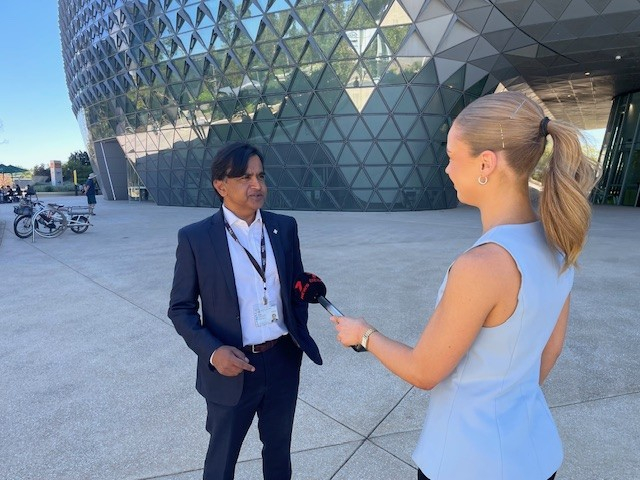
Last week was DonateLife Week and AMA SA was active in the media highlighting the importance of individuals both registering as organ donors and having conversations with family members about their wishes.
South Australia leads the nation in donor registration, with about three in four eligible adults registered on the Australian Organ Donor Register. Much of this success is attributed to our driver's licence system, which allows people to register when applying for or renewing their licence. The position paper endorsed by Council calls on the South Australian Government to champion this model nationally and encourage other states and territories to follow suit.
Yet registration is only part of the story. South Australia's family consent rate has fallen significantly in recent years, meaning too often the wishes of registered donors are not fulfilled because families are unsure what their loved ones wanted. The paper therefore supports greater public awareness of the importance of family conversations, while also addressing another less recognised challenge: between 43 and 70% of potential donors die in circumstances that fall under coronial jurisdiction, where procedural barriers may prevent donation.
A Queensland review of 177 coronial cases found organ donation did not alter the outcome of a single criminal trial. With the Australian Law Reform Commission currently reviewing this area, the position paper gives AMA SA the opportunity to advocate for reforms that could help more registered donors have their wishes honoured while maintaining the integrity of coronial investigations.
It's also important to remember the people behind these discussions. Last week, over afternoon tea at the AMA SA office, I caught up with Tania Tremonte, who received a kidney transplant 22 years ago and was reunited with her transplant surgeon, Adelaide transplant pioneer Associate Professor Mohan Rao. We were also joined by Dr Tim Brown, a transplant surgeon from Belfast who is currently supporting South Australia's transplant service, and Dr Ruben Sebben, a CALHN radiologist undergoing regular dialysis while awaiting a donor kidney.
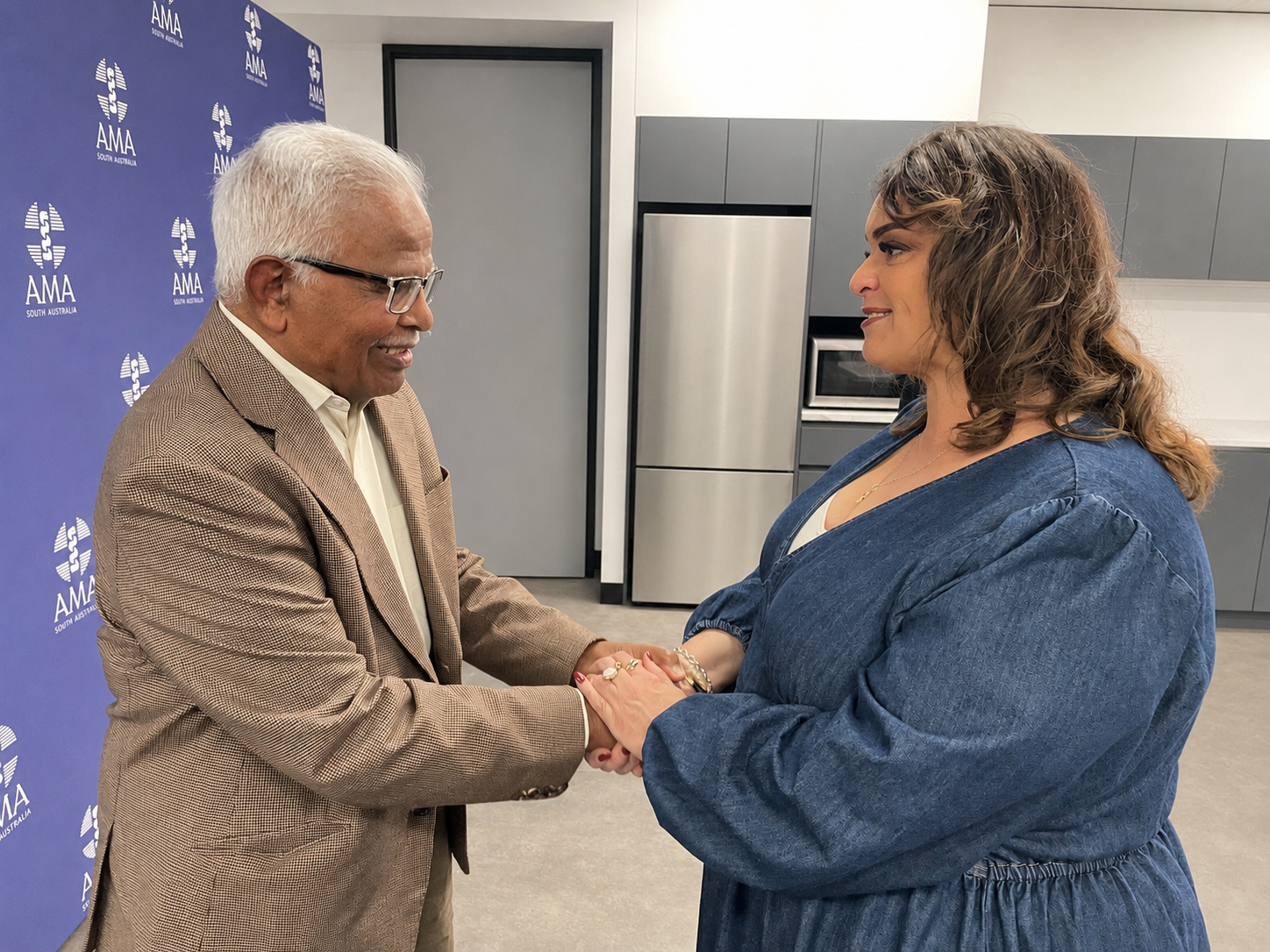

It was a timely reminder that behind every debate about organ donation are real people whose lives are directly affected by the decisions we make.
To discuss our work on organ donation, pharmacy prescribing or any other issue, please don’t hesitate to contact me at president@amasa.org.au
From Malaysia, salam sejahtera!