President’s update: Election pledges without plans and Urgent Care Clinic insights
In this week's President’s Update, A/Prof Peter Subramaniam highlights the gap between big hospital announcements and the lack of workforce planning. He also reflects on a new report into Urgent Care Clinics that reinforces long held AMA SA concerns.
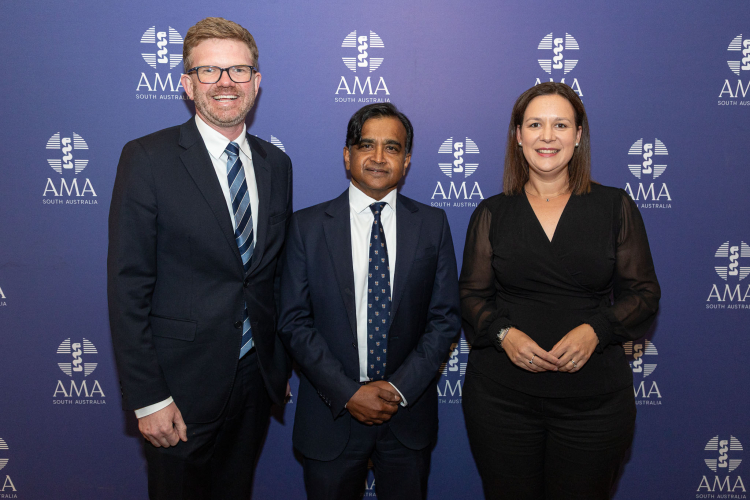
In the past week, AMA SA has publicly responded to two major pre-election announcements purporting to increase health capacity in Adelaide’s northern suburbs and the growing communities north of the city.
Last week, the Liberal Party pledged $350 million for a new hospital in the Barossa. The exact location and construction timeline are unclear. The Opposition Leader says that if her party wins government, it will procure land and begin design after the election.
On Tuesday, Labor announced it has secured a nine‑hectare site at Concordia for the proposed Greater Northern Adelaide Hospital. The Government says that if re‑elected, planning will begin in the next term, with construction expected to start early next decade – though no completion date has been provided.
It’s worth noting that Labor’s proposed site sits within the Liberal Leader’s electorate, but politics aside, AMA SA is concerned about the lack of workforce planning underpinning both announcements.
Right now, no party contesting the South Australian election has put forward a detailed, costed workforce plan to recruit, train and retain the clinicians and support staff needed to safely operate expanded or additional facilities. Without a workforce strategy, new infrastructure will simply shift pressure elsewhere in the system.
AMA SA will continue to work constructively with all parties to ensure that infrastructure investment is matched by:
• A transparent workforce plan
• Clear implementation timelines
• Immediate strategies to improve patient flow and access
Health policy must be comprehensive. Capacity, workforce and community care reform – including essential investment in general practice – must move together.
Urgent care clinic report
A new independent review of Urgent Care Clinics (UCCs) backs up what the AMA has been saying for years: the federal funding invested in this model of care - $1.4 billion over seven years - would be far better directed into general practice.
The findings of the report, published by ABC News, show UCCs have taken some pressure off EDs, reducing urgent‑care‑level presentations by up to 10%, but crucially, there is still no evidence they have improved hospital waiting times. At the same time, clinics continue to struggle with serious workforce shortages and uneven access to diagnostics, especially outside metropolitan areas. We’ve seen this first-hand in Mount Gambier – a city where the GP shortage is so severe that patients often have to travel interstate for care.
These findings echo AMA SA’s long‑held concerns: UCCs fragment care by pulling from the same limited GP and nursing workforce that is already stretched thin. They cannot deliver the continuity of care patients get from their usual GP, they are not easing ED bottlenecks, and they offer little in the way of GP training opportunities, adding almost nothing to the pipeline needed to secure the future workforce.
What our communities – particularly rural and regional ones – really need is sustained investment in general practice, not another short‑term model that spreads an already thin workforce even thinner.
Private hospital governance and professional conduct
This week’s ABC Four Corners investigation (Scarred) has prompted important national reflection on clinical governance within private hospitals.
While the allegations relate to events interstate, the fundamental principle applies everywhere – patient safety, transparency, ethical practice and clinical governance. Private hospitals are a vital and valued part of Australia’s health system, including here in South Australia, but they require robust systems that monitor procedural activity, align operative findings with pathology, respond promptly to internal concerns, and support clinicians who speak up.
For AMA SA, this is not about commentary on an individual case; it is about system integrity. Boards and hospital operators have a clear responsibility to ensure strong clinical governance frameworks are actively functioning.
Patients must feel confident that recommended procedures are evidence-based, that informed consent is meaningful, and that unusual practice patterns are reviewed early. Trust in the private health sector – as in the public health sector - is essential to the sustainability of the entire health system.
As always, I look forward to hearing from you. Please do not hesitate to contact me – president@amasa.org.au