'Gun reform is a public health imperative'
Federal MPs will return to Canberra two weeks early to debate legislation establishing tougher hate speech laws and gun reform, in the wake of the Bondi Beach attack. One month since the atrocity, AMA SA President A/Prof Peter Subramanian argues it’s time to turn reflection into public health action.
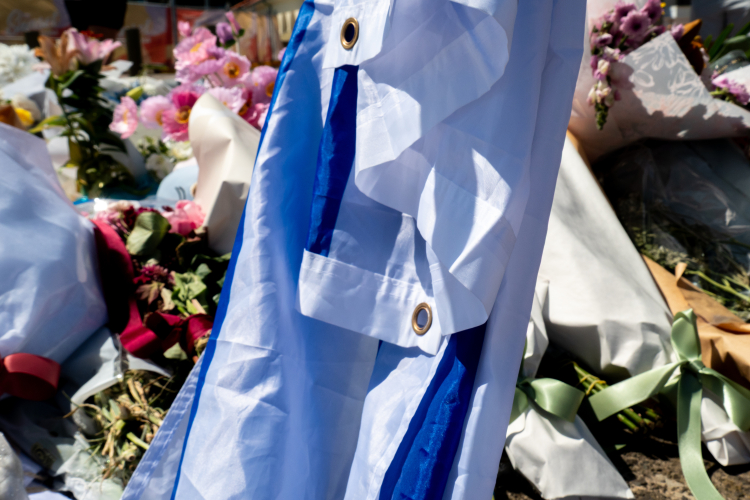
This week marks a month since the Bondi Beach mass shooting – an atrocity that has torn at Australia’s sense of safety. Our thoughts, prayers and our hearts remain with the families who lost loved ones and all those who have borne the violent brunt of a direct attack on the Jewish community. Their tragic, senseless deaths must sharpen the resolve of our nation to ensure this never happens again.
Doctors, nurses and paramedics who work as first responders and in the emergency departments and trauma units of our hospitals see something the public does not: the human reality behind every statistic on gun violence. We see the desperate resuscitation measures, the parents in the relatives’ room, and the staff driving home in silence after a shift that will stay with them for life.
Australia’s decision in the 1990s to adopt the National Firearms Agreement (NFA) remains one of the great public health achievements of our time. In the 18 years before the 1996 reforms, there were 13 mass shootings in Australia; in the decade afterwards, there were none. Deaths linked to firearms, including homicides and suicides, also decreased steeply. That is what a public health response to violence looks like: upstream, evidence based and effective.
Yet Bondi has revealed the limits of a system that has not kept pace with time. National Cabinet’s agreement late last year to a sweeping overhaul of Australia’s gun laws is both necessary and welcome. Leaders have committed to rapidly establishing a national firearms register, capping the number of guns any one person can own, tightening the categories of permitted weapons and modifications and requiring Australian citizenship for a firearms licence. They have also agreed to greater use of criminal intelligence in licensing decisions and to renegotiate the NFA to reflect contemporary risks, including new technologies and high capacity weapons.
From a public health perspective, these reforms go to the heart of what saves lives. A real time national register closes the loopholes created by state by state systems and paper records. Capping the number and type of firearms an individual can hold acknowledges a simple clinical reality: the more weapons and the more lethal their design, the greater the potential for catastrophe. Limiting licences to citizens and using broader intelligence in licensing recognises that risk is dynamic – people’s circumstances and affiliations change – and that licences cannot be ‘set and forget’.
It is critical, though, that this national response remains anchored in evidence, not in fear or in the stigmatisation of any community. Research is clear that mental illness alone is a poor predictor of violence. Risk arises from a web of factors – prior violence, access to weapons, substance use, social isolation, extremist ideology – and our licensing, review and information systems must be designed to detect those patterns over time.
The health system, for its part, must also look in the mirror. Australia’s trauma services are world class but optimised for blunt trauma – car crashes, falls, workplace injuries. Penetrating trauma from firearms remains relatively uncommon here, especially compared with North America or parts of Europe. That is a good problem to have, but it carries a risk: most of our clinicians and teams do not regularly manage multiple high velocity gunshot wounds. The Bondi attack, and the volume of patients treated in Sydney hospitals in a single day, should prompt investment in training and simulation for multi casualty penetrating trauma. We cannot assume that because it is rare, we do not need to be ready.
There is another invisible casualty in all of this: the workforce. Studies internationally show elevated rates of anxiety, depression, burnout and post traumatic stress disorder among doctors and nurses who respond to mass casualty events. The psychological toll of repeated exposure to trauma is real. Any national strategy on firearms and public safety must therefore include structured support for healthcare workers before, during and after such incidents. Caring for the carers is not a luxury; it is a prerequisite for a resilient health system.
The Bondi massacre has reminded us, in the most brutal way, that complacency is not an option. National Cabinet has signalled a willingness to act decisively, just as Australia did after the Port Arthur massacre. The task ahead is to turn that intent into legislation that is nationally consistent, enforceable in practice, and grounded in what decades of research tell us prevents injury and death.
As a surgeon and President of the AMA in South Australia, my message is simple: stronger, smarter gun laws are not about politics. They are about public health. They are about making sure that the next time sirens converge on an Australian beach, or school, or place of worship, it is not because we failed to learn the lessons of a tragic Sunday on Bondi Beach.