Transcript: AMA 2026 Public Hospital Report Card launch press conference
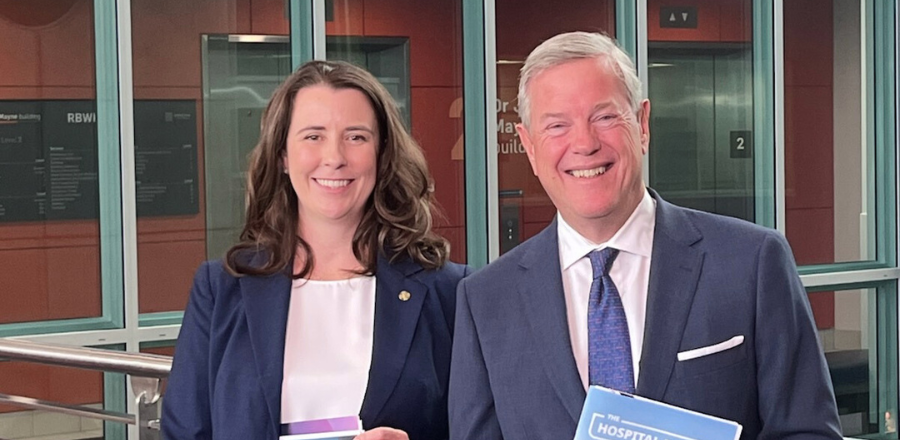
Press conference transcript: AMA President Dr Danielle McMullen and Queensland Minister for Health and Ambulance Services Tim Nicholls at Royal Brisbane and Women's Hospital, Brisbane
Subject: AMA 2026 Public Hospital Report Card
DANIELLE MCMULLEN: Good morning, everyone. I'm Dr Danielle McMullen. I'm the President of the Federal Australian Medical Association and pleased to be here today to release our 2026 Public Hospital Report Card, and so grateful to be joined by the Queensland Minister for Health, Tim Nicholls.
Today, our Public Hospital Report Card unfortunately shows no surprises. It will be no surprise to Australians that our patients are waiting too long to be seen and treated in our emergency departments or to get the planned surgery that they need. Our report card looks at a range of performance measures of our public hospitals right around the country, and no state or territory is immune to the pressures facing our health system at the moment.
In our emergency departments, which are the frontline of our healthcare system, our ED doctors and nurses see our sickest patients. They're saving lives day in, day out, and yet they are being stretched to breaking point in the current system. Emergency departments are not a place to spend a long time. In fact, there's something called the four-hour rule or a target, where once you've started your treatment in emergency, you should be either discharged home or into a ward within four hours. And unfortunately, this year, only 53 per cent of patients were seen within that target. That's not acceptable, it's a strain on our health system, and it's not the fault of our emergency staff. They're working as fast as they can, but with unprecedented demand, they're not able to see these patients as quickly as they would like to. That, of course, has a flow on effect to patients coming in the front door. This year, we've also seen that patients triaged to an urgent category — so that's people with fractures, severe abdominal pain, significant wounds that need addressing — a third of those patients are also not being seen within clinically recommended time frames. That obviously has an impact on patients who are in pain and need their conditions treated, but it also has an impact on staff. I can't express to you strongly enough how heartbreaking it is as a healthcare practitioner to not be able to see a patient as quickly as you know they need to be seen.
Moving on to elective surgery, there have been some positives. We've seen a small reduction in the median wait time for planned surgery across the country, and that shows that governments are trying to improve those wait list times and make sure that more Australians are getting the healthcare in the time they need.
Beyond emergency departments — so what's behind all of this? A lot of it is to do with our ageing population. We're seeing more Australians with chronic healthcare problems, and older Australians are more likely to need healthcare. As I mentioned before, demand is increasing, and that's putting the majority of the strain on the system. In addition to that, we've got shortages of a number of our health workforces right across the country, and that's mainly our doctors and nursing staff. And that workforce shortage is affecting the ability of our services to run as efficiently as they'd like to.
In terms of solutions, we've obviously, within the past few months, seen the Commonwealth Government and state and territory governments come to an agreement about health system funding through the National Health Reform Agreement. The Commonwealth has made a significant $25 billion additional invest investment into public hospitals. And while the AMA would have liked to have seen that be a larger investment and made quicker, it is a significant investment, nevertheless. The onus is now on state and territory governments to also increase their investment and make sure that that funding flows through to patient care as quickly as possible.
Here in Queensland, we have seen some steps towards that investment. I'll leave the Minister to describe the activities of his government. But they have significantly increased and continue to increase capacity in our system, which is of critical importance. Across the country, we have seen a raw increase in bed numbers and that's been celebrated in this report, but unfortunately, most of that has been offset by population growth. And particularly, for our older Australians, the bed number, that capacity per population over 65, is the lowest on record. Clearly, with an ageing population, that maths doesn't add up. We need that bed growth to continue.
We also need to invest in our workforce, and I understand that Queensland is in the midst of its workforce plan and making significant investments there. Nationally, we need to replicate that. We need a national health workforce agency so that we can plan for and train the health workforce that we need and make sure that they're distributed right across the country. Regional and rural Australia is struggling even more than our metropolitan areas and desperately needs that health workforce. We need to train doctors in the bush. We need to retain doctors in the bush. Having worked in regional Queensland, it's an incredible place to work, but we need mechanisms to be able to keep our workforce there.
I'll hand over to the Minister to make some comments about Queensland specifically.
TIM NICHOLLS: Well, thank you Dr Danielle McMullen from the AMA. And I wanted to be here with Dr McMullen because the report that's being released and was released today highlights the problems that we have been highlighting in Queensland for the past decade. And if you look at page 32 of that report, it really bells the cat on the failure to invest in the system and the decline that we've seen. Whether that's in the length of stay over four hours, whether that's in the capacity, it is clearly outlined in that report, and that's why our investments are so important as we seek to address those concerns that have been raised and highlighted in that report. That's why it's so important that we have a clear focus on elective surgery, and we've invested $1.75 billion to reduce that elective surgery wait list and we've managed to do that. More work to be done. It's a continuous program. That's why we're investing in making sure that we can drive down our ramping rates, which has been highlighted in this report quite significantly.
Now, we've had some success, but that fight is not over either, and we know that there will be more work to be done and that there will be variations of it. But that's why we're investing in things like transit lounges to move people through the system. That's why we're investing in additional CT and MRI machines, to stop people having to come to hospital in the first place for those sorts of services. It's why we're investing in seven-day discharge, because the report highlights the issues around access and bed block.
And it's why we're taking up the fight with the Commonwealth in relation to stranded Australians, and those are those older patients of ours who are in our hospitals who require care and require proper care but don't require the care that a hospital provides. They require the care that you get in a properly resourced aged care facility or the care that you get at home with the proper supports. And that is the significant issue that we face. Here in Queensland, we are ground zero for stranded Australians. We have more than a thousand. That's the size of this hospital, Queensland's largest, who are in hospital beds who need to be in aged care. And that's why we were particularly disappointed last week to see the Commonwealth allocate funding for New South Wales and South Australia and Western Australia but not have a conversation with Queensland about what could be done up here with some funding. We have projects that are ready to go. We have ideas about funding that could release more aged care beds, that would help address the issues that we see around access, to help address the delays that this report provides.
So, this report highlights the issues that have been allowed to develop for the last 10 years. This report highlights the need for more action. But it strengthens our resolve and it reinforces our commitment to continue to invest in more hospital beds, whether that's 2,600 more beds under the Hospital Rescue Plan, three new hospitals, the expansion of 10 others, whether that's the investment in mental health facilities, step-up and step-down facilities, whether that's expanding some of our current facilities around the state, whether that's investing more in our ambulance services that we are doing. And it highlights the ongoing challenge that we face in delivering health services across Queensland. But it's not a challenge that we're not up to. It's something that we are firmly focused on and will remain focused on.
And I also particularly want to call out the work that we're doing with our workforce, because it does highlight the needs of workforce. And we've spoken about workforce, the persistent shortages that have been allowed to develop in our rural and regional areas. More than 11 per cent of positions in rural and regional Queensland have been unfilled for more than 12 months, and that is placing rural and regional Queensland at a significant disadvantage compared to here in the southeast. And that's an important fact to focus on, because we can't do this without an engaged and enthusiastic workforce. And that's the other component that this report highlights, and it again highlights the importance of our workforce rescue plan that we'll be delivering later this year.
So, any questions?
DANIELLE MCMULLEN: Thanks, happy to take questions.
QUESTION: Doctor, I wonder how Queensland compares to the rest of the country? In terms of your latest report, you've got a very broad scope and a very broad assessment there. How's Queensland tracking compared to our interstate competitors?
DANIELLE MCMULLEN: Like every other state and territory, Queensland isn't immune from these challenges. There have been some improvements in some areas, both in emergency departments and in elective surgery wait times here in Queensland, but also decreases compared to performance last year on some other metrics. So, Queensland remains, like many other states, with those challenges to face, and some work underway and more work needing to be done to be the best in the country, if that's the challenge put to them, but really to meet the needs of Queenslanders here in this state.
QUESTION: What is the four-hour rule, and why is that getting worse in Queensland?
DANIELLE MCMULLEN: So, the four-hour rule or the treatment within four hours is a target, a nationally agreed target, that patients, once they've started their treatment within an emergency department, should have that treatment completed and be discharged home or be admitted to a hospital ward within four hours. And that recognises that emergency departments are loud and noisy, they're not an appropriate place to be spending hours and hours, and our emergency staff are excellent at saving your life, keeping you well and getting you to the place where you need care. And that's been a target in place for many years now, but it is- the performance against that metric is falling, down to its lowest on record at 53 per cent of patients meeting that four-hour target.
Our view is that's because of the logjam in our public hospitals. We've got an increasing demand, so we've got more and more patients coming through the front door. But we're also struggling, as the Minister also mentioned, with stranded patients, patients waiting for discharge, for aged care packages, for NDIS packages who are on the wards meaning that those are beds unavailable for patients who need to be brought up from the emergency department. So, it's those two factors, the demand at the front door and the difficulty with exit block, that are both contributing to that four-hour target being harder for emergency staff to reach.
QUESTION: The report mentioned that Queensland's per-person public hospital spending remains the lowest in the nation. Should Queensland be investing more in their patients?
DANIELLE MCMULLEN: There's certainly been a significant increase in Queensland. So, the graph that… our report does show that early in the pandemic, federal and state funding in Queensland was on par, but that gap has widened again now. Of course, that doesn't take into account the NHRA funding from earlier this year. But Queensland has made significant investments in the per-patient funding and has turned that graph around, and from what the Minister has said this morning continues to invest in health. Obviously, as the AMA will continue to monitor those investments, make sure they're reaching Queenslanders, and nationally make sure that investments by both the Commonwealth and all of the states and territories reach Australians as soon as possible so that we can turn these figures around.
QUESTION: Are there any particular things you have on your wish list for the workforce strategy?
DANIELLE MCMULLEN: So, we would love to see more training in regional areas. We know that evidence shows that the way to keep doctors in regional areas is to take regional students, train them in regional areas, allow them to complete that training in that area. At the moment, while we've seen significant improvements in the ability to do medical school and your internship in a regional town, it's quite difficult to do more of your advanced specialty training in that area. We'd like to see more training in place so that doctors stick and stay in the bush.
And in addition to that, we need a national health workforce agency. At the moment, we really struggle to get that national data about how many doctors do we have, how many do we need, what flavour, what specialties do we need, and where do we need them to work. We need an independent agency to be planning and creating policy around health workforce, not just medical, but also our nursing and allied health, to make sure that we have the workforce for the future. We've all seen this demographic curve coming. The ageing population shouldn't be a surprise, and yet our health system feels unprepared. Now we need to act. We're already seeing the strain on the system from our demographic changes. We can't afford to wait longer to make sure we've got the health workforce we need.
QUESTION: There are significant gaps in health outcomes between citizens of Queensland and those living in regional, rural and remote areas of the [indistinct] centralised state. What does the AMA recommend the Queensland Government do to address those gaps and [indistinct] outcomes? Is it more than just regional training? Do you need to see things like GP incentives, or health worker incentives to get the workforce in?
DANIELLE MCMULLEN: That's not a problem unique to Queensland, but of course Queensland does have a large regional area. As someone with family in central Queensland and having worked in North Queensland, I understand that the pressures of both working and living in those areas are different to those that we see here in South East Queensland. We do need to train more doctors and nurses in those areas. We have some workforce incentives, so a number of the Commonwealth Government's bulk billing incentives introduced at the end of last year, and a range of other Medicare-related payments do have an additional boost for regional and rural Australia. But we need to be constantly looking at those, making sure that it's enough, that it's fit for purpose. Queensland were the leaders in the rural generalist pathway, and rural generalists have recently been given recognition through ARPA and the Medical Board as a subspecialty of general practice. I think that's an important step towards making sure we've got the right kind of specialists trained for rural medicine out in regional Queensland.
And indeed, across the country, we do need to look at our settings for specialist training supports, workforce incentive supports for medical specialists, but also our allied health. Often these practices in rural Australia struggle to recruit nurses and allied health to help support the workforce. No health professional can do this alone, and we do need to work in teams, so we need better incentive for our practice teams.
AMA portion of press conference ends