AMA Transcript: Ambulance Ramping Report Card launch doorstop
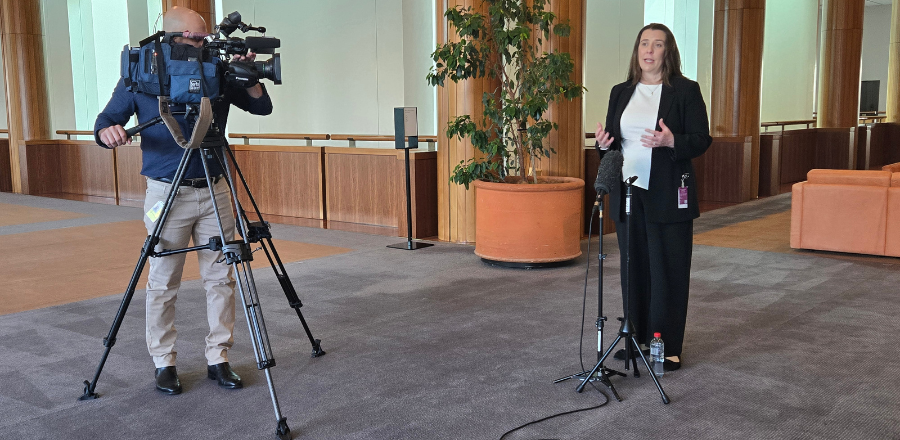
Transcript: AMA President, Dr Danielle McMullen, doorstop, Canberra
Subject: AMA Ambulance Ramping Report Card 2026 — a system under strain
DR DANIELLE MCMULLEN: Good morning, I’m Dr Danielle McMullen, President of the Australian Medical Association, and today I’m launching our Ambulance Ramping Report Card. This is Australia’s only national snapshot of ambulance ramping right around the country, and unfortunately this year’s report paints a stark picture. We’ve seen a record year of ambulance demand, more ambulance call-outs than ever before, and more than half of ambulances, people calling an ambulance, needing to go to emergency departments. So that’s more than 2.4 million ambulances arriving at our emergency departments right around the country. That’s busy enough, and yet when they get there, we’re finding that far too many Australians are stuck in that ambulance, waiting too long to be seen definitively in the emergency department.
In many states and territories, there has been a slight improvement from the year before in terms of meeting their targets for how many patients are off of stretchers or out of ambulances and into emergency departments. But no one is better off than they were five years ago, so that trend of patients waiting too long and far longer than they were five years ago continues. This has a huge impact on paramedics, doctors and nurses trying to keep up with demand and unable to provide best practice care. But most of all, it has an impact on our patients. Every minute spent too long in an ambulance is a delay to definitive care, and for some patients, that can mean the difference between life and death.
It’s not good enough. We need our system to improve, and we need to be able to see patients within clinically recommended timeframes. That will take cooperation across state and territory governments. It means investment in our public hospital capacity so that we’ve got the hospitals that we need. It’s investment in our workforces across hospitals, ambulances and our broader health system. And importantly, it is about investment in prevention in general practice and aged care. One of the contributors to ambulance ramping is hospital exit block, that logjam in our hospitals where the reason that people can’t get in is because often, they can’t be discharged back to home or aged care with appropriate supports. So we need investment in our aged care sector to clear the hospital logjam.
And with an ageing population, more chronic and complex disease, we need better investments and supports around prevention and early intervention. That's in the community with general practice or in hospital outpatient clinics to make sure that people who have minor to moderate illnesses can access the care they need and get that coordinated care to prevent that emergency hospitalisation, that ambulance callout and that ramped ambulance. We can do better. We've got targets right across the country, and we need to meet them.
The last thing we're calling for is a coordinated data set because while we present a snapshot around the country, we've got different targets and metrics and KPIs right around the country, which makes it really impossible, actually, to compare state to state and see how we're really performing as a country. We need a coordinated set of data around ambulance treatment times and ambulance ramping to make sure that we can present the best possible representation of what's really happening to patients around the country.
QUESTION: What measures can- obviously just everyday people do to obviously help prevent the ambulance ramping? Got people calling up ambulances for non-life-threatening injuries or emergencies that are then clogging up the system. What’s things that people can do to stop it?
DR DANIELLE MCMULLEN: It's really important that people still call an ambulance when they think they need one. Our ambulances are there to provide emergency care to people and do an incredible job. As we're seeing, more than 50 per cent of ambulance call-outs are resulting in a transfer to hospital, so most people who call one need to be in hospital. It is important for people who've got mild or minor illness to think about where else they might get care. The 1800MEDICARE phone line is available to help if you're not sure whether you need an ambulance or you're not sure whether you need an urgent care centre, to see your GP, or to go to hospital, that can provide some advice. And if you've got a chronic illness or chronic conditions and you're concerned about needing healthcare, check in with your GP, get those regular check-ups to prevent that ambulance call-out.
QUESTION: Obviously it's a flow-on effect for the ramping if there's not enough beds in the emergency room, people obviously having to get triaged sometimes in the actual hallways of the hospitals. I've witnessed it myself. Obviously, there's a whole range of issues that lead to the ambulance ramping. Would more beds, more nurses and more doctors help with the issue with ramping?
DR DANIELLE MCMULLEN: Ambulance ramping isn't an ambulance or, in fact, even an ED problem, it's a whole-of-system problem. We've got a logjam in our public hospitals. We need stronger investments in coordination across our hospital system to get enough beds and enough staff to be able to treat the people who need hospital care. That will speed up the visits in emergency, make sure that once you get in that front door, or arrive in an ambulance, you’ll be triaged on time and can be seen within recommended timeframes. It’s also important that we invest in aged care so that once people are well enough to leave the hospital, they can have a safe, supportive place to go.
Thanks very much.
* * End * *