Transcript: Have the Jab Chat campaign launch
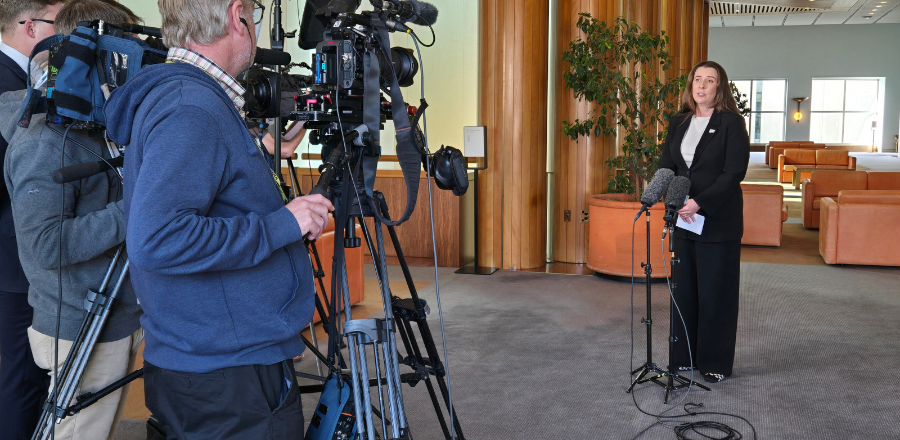
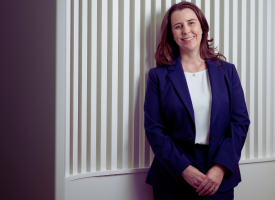
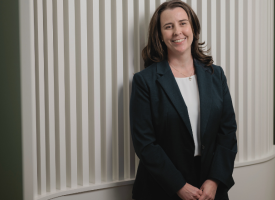
Transcript: Federal AMA President, Dr Danielle McMullen
Subject: Have the Jab Chat campaign launch doorstop at Parliament House, Canberra
Dr DANIELLE MCMULLEN: Good morning. I'm Dr Danielle McMullen, President of the Australian Medical Association. In an age when health information and misinformation is everywhere, it's easy to feel overwhelmed and it's hard to separate fact from fiction. Australians have more questions than ever about their health, and particularly about immunisation.
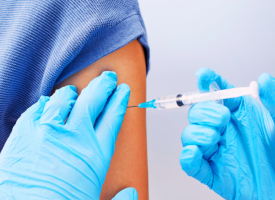
So today, we're launching our campaign and calling on all Australians to come and have the jab chat with their usual doctor. Head on in, there's no question too silly, we're there to answer your questions in a qualified, personalised and confidential way to help Australians make those decisions about their health for themselves and their families.
We know that immunisations and other health interventions can be confusing or scary, but your GP is there with that qualified health advice tailored to you and your family. Immunisation rates across Australia are falling, and that's a real concern to me and my medical colleagues. It's time that Australians had a reliable source of trusted information where they can go and have their questions answered.
Our campaign is launched today across social media platforms because that's where Australians are getting more and more of their health and immunisation advice. So head on into your doctor and have the jab chat.
QUESTION: Who or what do you blame for the falling rate of immunisation?
DANIELLE MCMULLEN: So we've seen a fall of immunisation since the COVID-19 pandemic and there's likely to be a number of factors impacting on that. Some people are just sick and tired of hearing about and talking about vaccines. There are a number of Australians now that are more vaccine hesitant. They've got questions, they're seeing information from around the world or on social media platforms that make them wonder which vaccines they really need and whether to have them according to the schedule recommended here in Australia.
So I'm seeing as a GP more of those questions coming through the door and that's where our campaign is targeted. We know most Australians really believe strongly in immunisation, they've just got more questions now than they did some years ago and it's leading them to delay or reconsider immunisation and so the time is now to really have those questions answered.
QUESTION: How do we go about, I guess, restoring people's confidence in the vaccine system in Australia?
DANIELLE MCMULLEN: Immunisations are the greatest invention of modern medicine. We've seen essentially in Australia measles was eradicated but we are concerned now that with immunisation rates falling below 95 per cent in children, that we could see illnesses like that come back. We are in the midst of an outbreak of diphtheria across central Australia, and that's the first time we've had a large outbreak in more than 20 years.
Restoring confidence in immunisations is about giving Australians a trusted place to have the conversation and that's the focus of this campaign. Your usual GP, your usual doctor understands your health history, understands the context of your family, and is a confidential space to have those conversations, ask the questions you're too nervous to ask your neighbour, or you're not sure what the information, the quality of the information, you may get back, and really make sure that people are getting that trusted health advice.
QUESTION: Can I ask you on, just while we have you, your broader response to the changes made to the NDIS yesterday, and also specifically the Government said that diagnosis alone now won't be enough to say if you're in or out of the NDIS; it'll be about your functional abilities. Who do you think is best placed to ultimately determine that for a patient and whether they are eligible?
DANIELLE MCMULLEN: As doctors, our focus is making sure that all Australians have access to the healthcare they need. People with disabilities still face disparities in their health outcomes and it's really important that as we introduce reforms to improve the sustainability of our NDIS that we also make sure that Australians with a disability have access to healthcare.
The NDIS was always designed with functional capacity in mind, and from the outset, an assessment of the impact that a disability is having on people's lives has been a critical part of that assessment process. Again, your usual doctor and treating team are best placed to help have that conversation and provide assessment around what is the real impact on people's lives. That's been part of the process from the beginning but in terms of reforms we need to make sure that strength of your usual GP, your usual care team, people who understand patients' needs is front and centre.
QUESTION: Are you worried there'll be shortfalls in medical care for people with a disability if the states don't pick up some of the slack? Obviously, we're going to see 160,000 people leave the NDIS. States like Queensland still haven't even signed up to Thriving Kids. Are you concerned that we'll have people in different states around the country not getting the care they need?
DANIELLE MCMULLEN: In terms of Thriving Kids, it is really critical that there's strong cooperation between the Commonwealth and that the states and territories reinstate many of the services that used to exist. It is harder for families with young children who may have mild to moderate needs or a delay in a single developmental domain to access care particularly through the public system, and so our advocacy through the Thriving Kids development process has been that these families need access to that clinical care. This is about providing treatment and allied health services to young children who need them to be able to catch up and participate in school and learning environments.
For the broader NDIS, our focus is of course on healthcare and making sure that people continue to have access to healthcare interventions. The NDIS has been about other social supports and mechanisms to make sure that people with a disability can engage in the community, including engaging with their healthcare, and so that's where the focus of our attention would likely be.
QUESTION: Are you overall optimistic that these changes will work and they are what the system's needed to continue into the future, and if not, I guess what are your concerns and where might the pitfalls be?
DANIELLE MCMULLEN: The NDIS is a critical part of our health and social services structure and supporting people with a disability to be able to participate in life. It needs to be sustainable. Our focus is on making sure that people with a disability can access healthcare, and so that's where our attention will be focused.
QUESTION: Back on the immunisation campaign, is it just being funded by the AMA or is the government helping with the campaign, and would you like to see the government do more to combat misinformation online?
DANIELLE MCMULLEN: This campaign was solely developed and funded by the Australian Medical Association. It shows that doctors really do care about immunisation as a critical part of our preventive health strategy and that our doors are open and ready to have that conversation with Australians about their immunisation questions. We work closely with the department and now with the beginnings of the Australian CDC, really keen to see the Australian Government increase its activities around combating health misinformation and also improving our immunisation rates. We can't afford to let them slip further. It is shocking seeing the impacts of falling immunisation rates in other parts of the world. And we really need to keep up our strong track record here keeping these infectious diseases out of Australia and letting particularly our children and our older Australians thrive and not succumb to these severe illnesses.
QUESTION: You mentioned the fall started during COVID. Do you think it was a mistake of governments then to mandate vaccines for workers or make it mandatory for people wanting to work?
DANIELLE MCMULLEN: I think there's been a number of reviews into the COVID-19 pandemic, and I think in fairness all decision makers, medical staff were doing the best with the information they had at the time. Again, we were relatively shielded and lucky here in Australia to not suffer some of the extreme rates of illness and mortality from COVID-19 that we saw in other parts of the world. Immunisations is what rescued many parts of the world and reduced the impact of the COVID-19 pandemic. Those COVID vaccines saved lives.
The policy decisions are a matter for significant review, and we should always look back and reflect on how we could do better and be more prepared for next time, but it's really important that that not tarnish other immunisation programs that have long been trusted here in Australia. We've got one of the best childhood immunisation programs in the world. Just last week, we saw the addition of RSV to our older adult immunisation program. It's a fantastic step forward and shows that our government is committed to immunisations and funding them. We really need Australians to get behind that. But where they've got questions, come and see your GP and have the jab chat.
* * END * *